
-
Test Service

-
Analysis Service

-
Accreditations/Approvals

- First time visitors
-

- Contact Contact
- JAPANESE


OTHER SERVICE

JE SERIES
JE Series
High-Precision Young’s Modulus and Internal Friction Measurement Device
This device employs a measurement method based on the free resonance method specified in ASTM and JIS standards. By utilizing electrostatic force for non-contact excitation and vibration detection, it is possible to obtain pure resonance frequencies. This approach eliminates errors caused by mechanical vibration during internal friction measurement, enabling the accurate measurement of even extremely low internal friction.
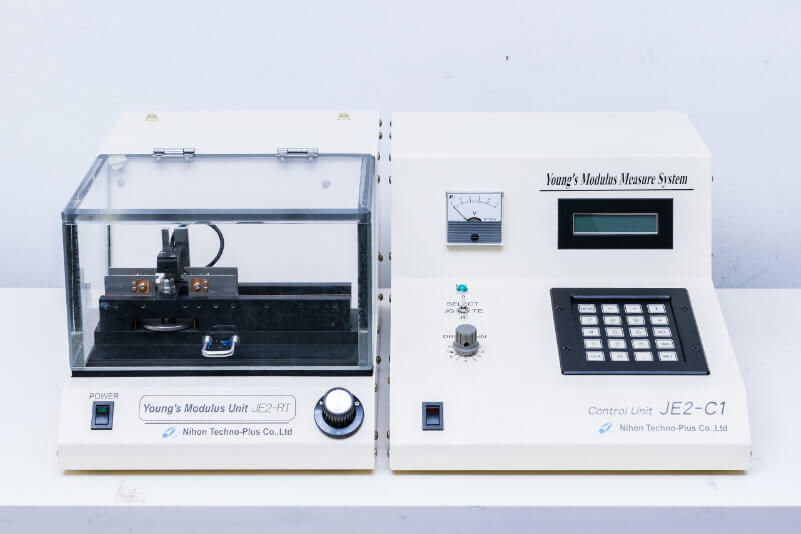
JE-RT
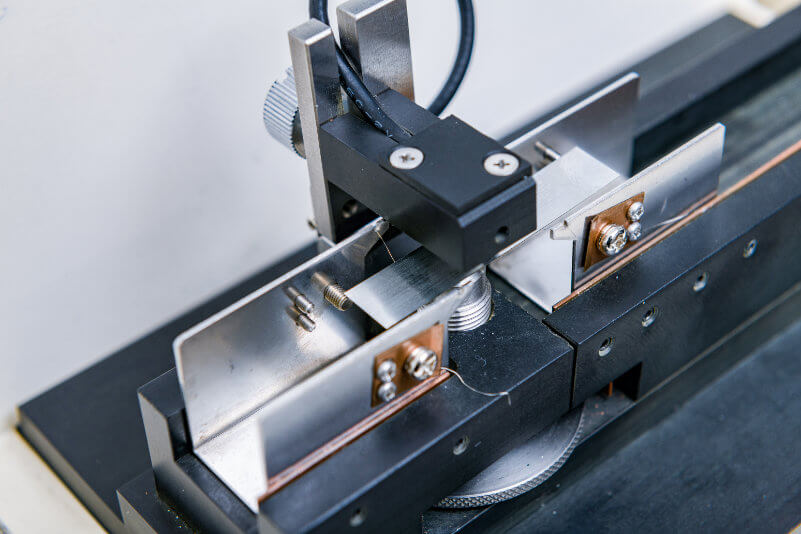
JE-RT vibration unit
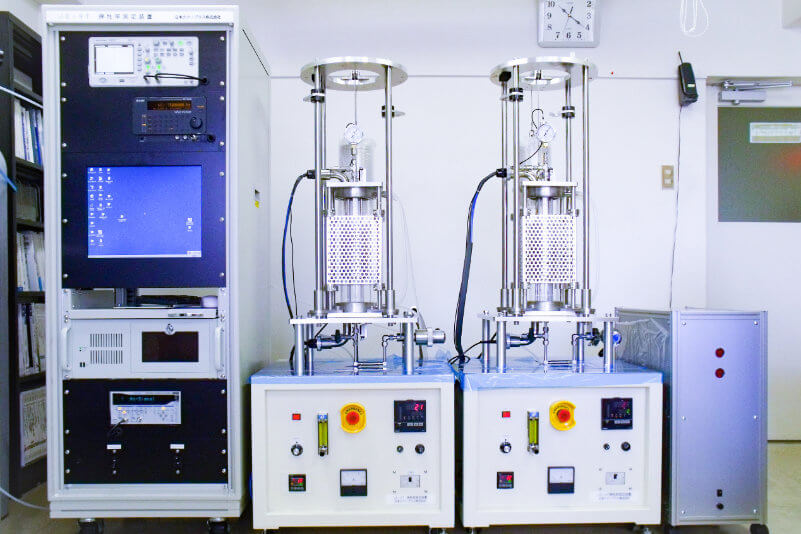
JE+JG-HT
Features of JE Series
This device is based on the free resonance method as specified in ASTM and JIS standards, utilizing a free-free suspension to vibrate the specimen. This method is employed to measure the Young’s modulus and natural frequency of materials. The specimen is supported at its nodes, where vibration is minimal; for plates or rods with a uniform cross-section, these support positions are set at approximately 22.4% of the total length.
The suspended-wire method was one of the earliest techniques put into practical use for measuring elastic moduli and is cited in numerous standards such as ASTM and JIS. In this configuration, the specimen is excited via a wire suspended near one node, while vibration is detected near the other node. However, care must be taken as this setup can influence the resonance frequency, potentially causing errors in Young’s modulus measurements. Furthermore, it is noteworthy that this method affects damping during internal friction measurement and imposes certain limitations on the weight and geometry of the specimen.
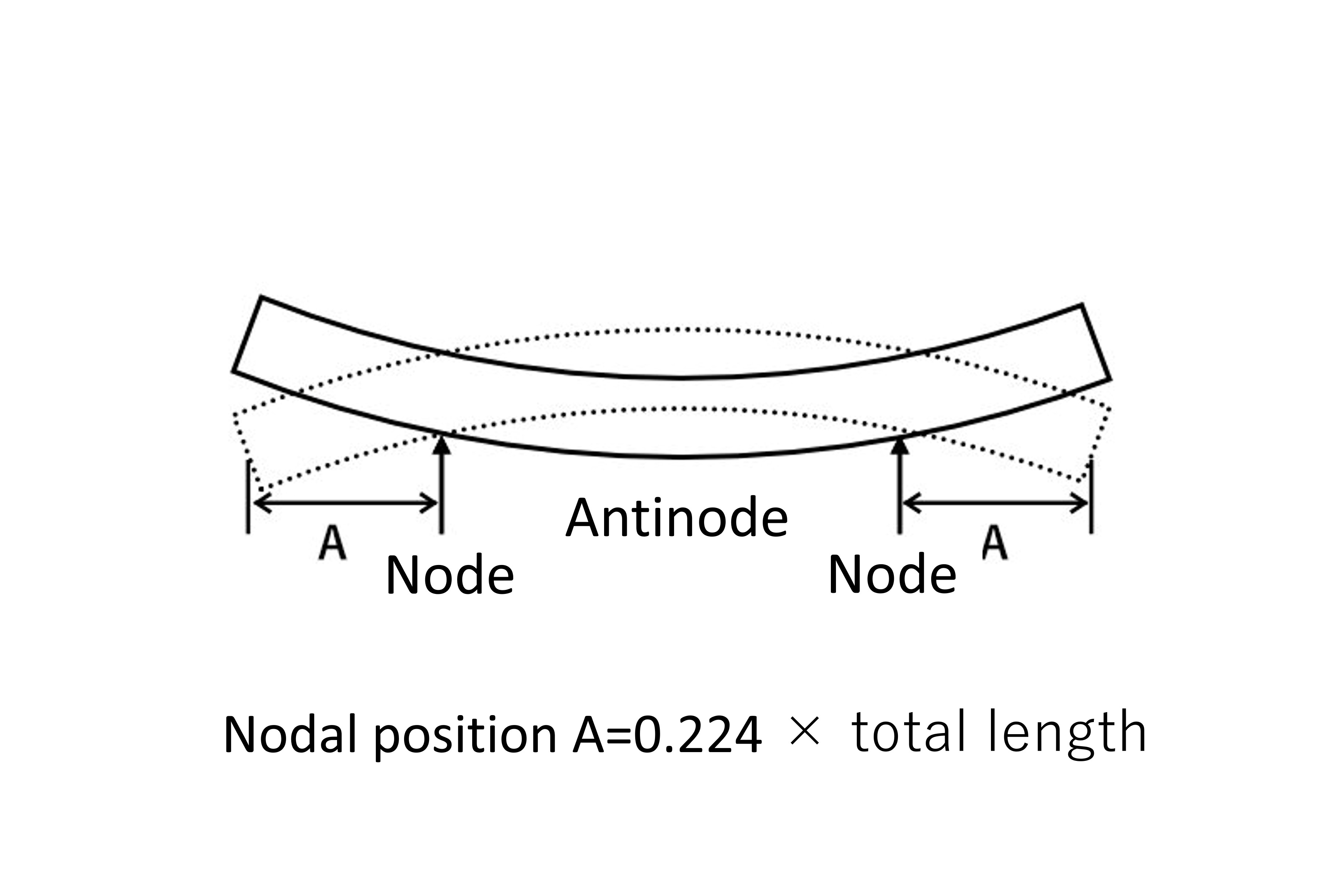
Fig.1 Free vibration diagram: Uniform cross-section bar
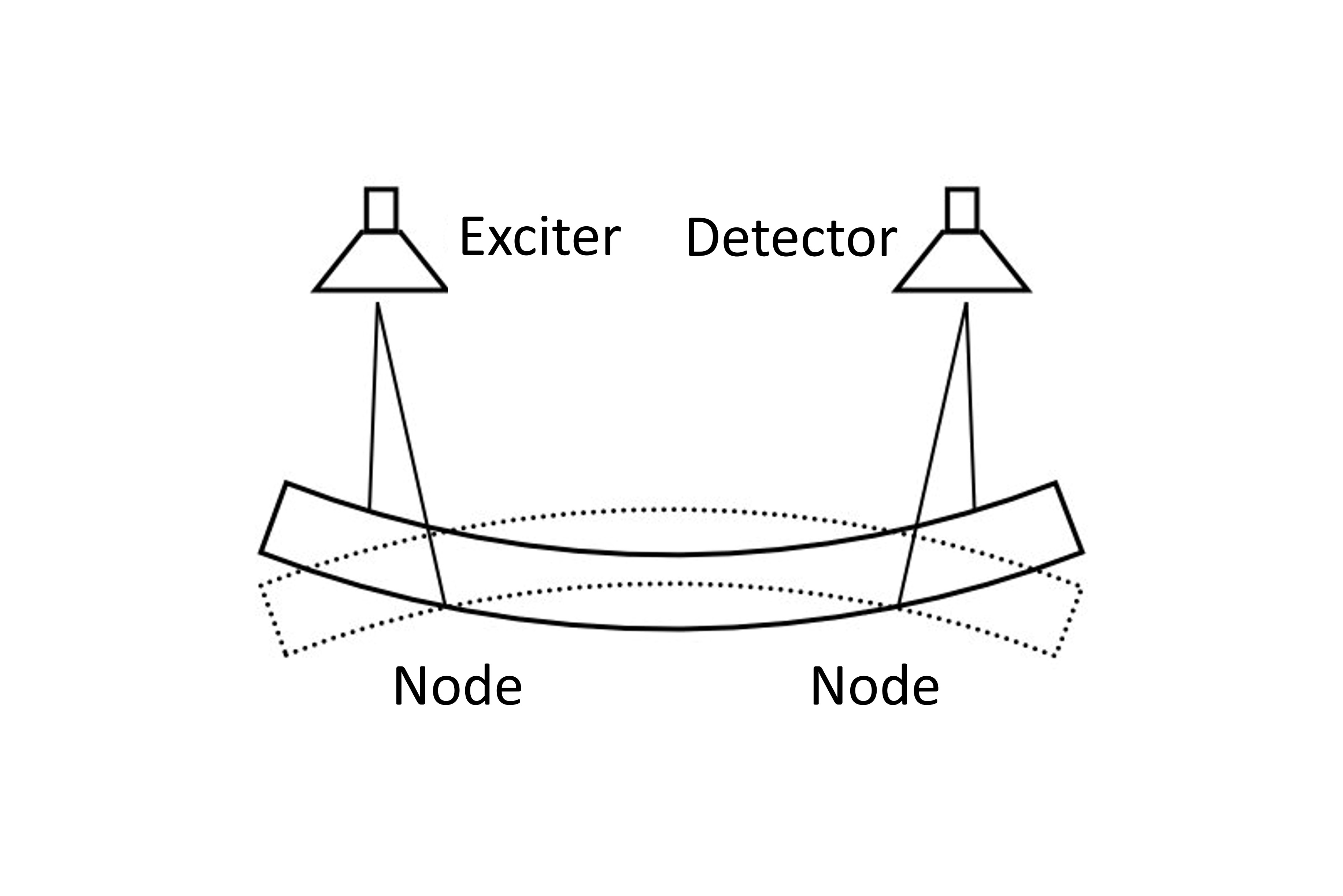
Fig.2 Suspension-wire driven type
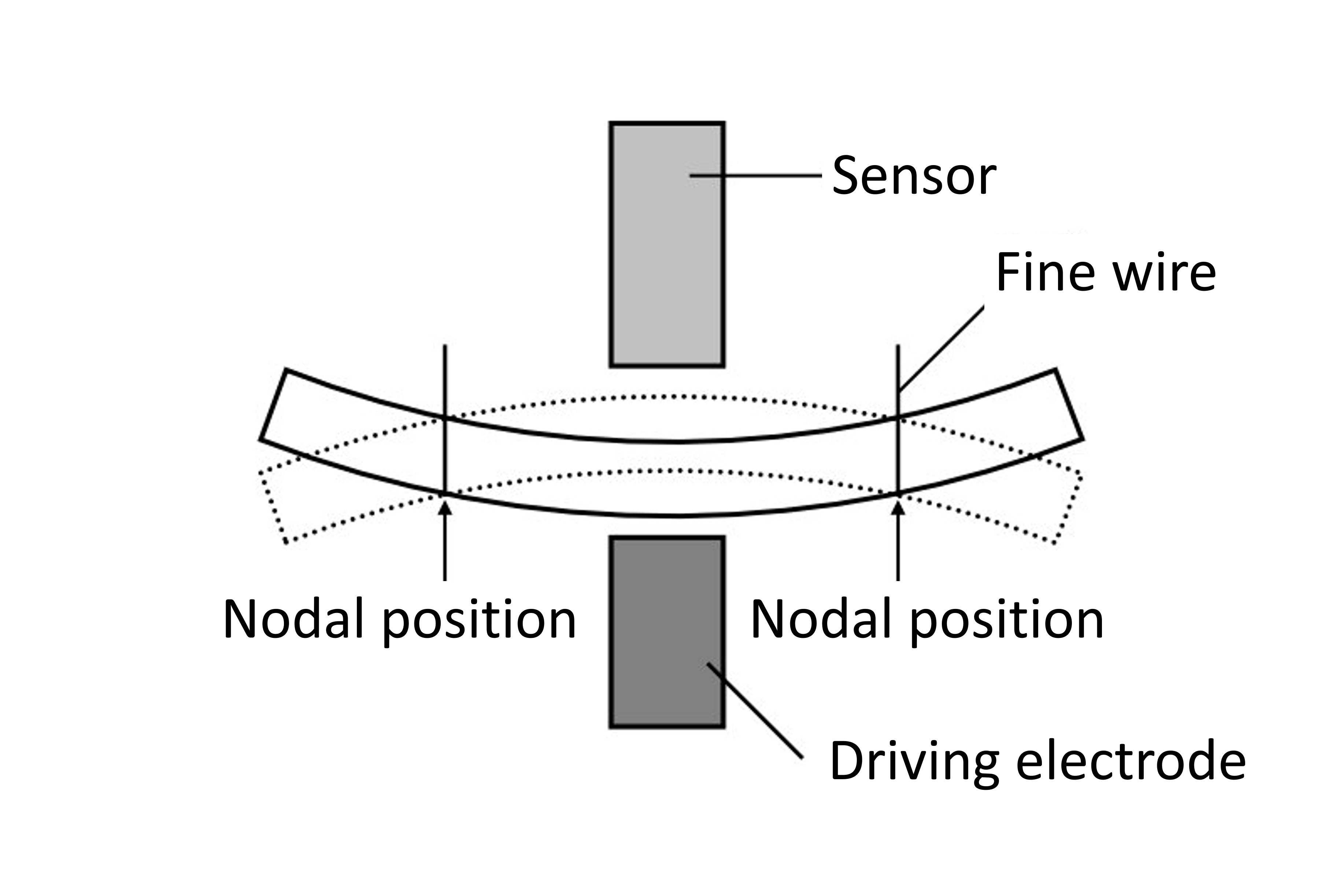
Fig.3 JE method
Our JE Series utilizes electrostatic non-contact excitation and non-contact vibration detection, with the specimen positioned at the nodes where no vibration occurs. This method allows for the acquisition of pure resonance frequencies without interfering with vibration during internal friction measurements. This mechanism enables the measurement of minimal internal friction and offers distinct advantages for measurements under specialized conditions, such as high or low temperatures. Furthermore, we have independently developed our own vibration detectors, enabling us to support equipment development across a wide temperature range, from cryogenic to high temperatures.
General Specifications of JE Series
| Easy operation and high-precision measurement |
| Accommodates a wide range of specimen geometries and materials |
| Ideal for measuring minute internal friction |
| General-purpose measurement device |
| Applicable to internal defect detection and quality control of materials |
| Compliant with a wide range of JIS and ASTM standards |
| Young’s modulus, internal friction |
| Isotropic materials |
| Rectangular: Thickness 0.3-10 mm, Width 3-10 mm, Length 13-130 mm |
| Cylinder: Diameter 0.3-10 mm, Length 13-130 mm |
| Temperature change measurement device: Specimen length max. 70 mm |
| Non-standard dimensions can be measured depending on the material. |
| Free resonance natural vibration method |
| Contactless electrostatic excitation |
| Contactless acoustic sensor/Capacitive displacement sensor |
| 600Hz〜20kHz |
| 20kHz〜100kHz(High-vibration model: JEH-RT) |
| Simply placed on wires at the vibration nodes |
| JE-RT (Room temperature) |
| JE-HT (High temperature: room temperature to 800°C) |
| JE-LT (Low temperature: -80°C to room temperature) |
| JEH-RT (Short specimen / High vibration: Room temperature) |
| Shear modulus and Poisson’s ratio can be determined by adding the JG Measurement Unit. |
*1: Product photos and specifications are subject to change without notice due to improvements.
*2: The above are standard specifications. Customizations are available upon request.